

If you want to reduce business travel costs and free up admin time, use a travel management platform and implement a clear travel policy. This gives your small and medium-sized business (SMB) in Australia better control over spend, stronger policy compliance, and real-time visibility into travel expenses.
With accommodation costs rising and travel conditions changing constantly, growing businesses need tighter control over travel decisions and spending. The goal isn’t just about cutting costs, but it’s also about being savvy with your spending.
Key Takeaways from Empire Traveller
- Centralising your bookings can save up to 20% off your annual business travel budget.
- Eliminate last-minute price spikes by setting automated approval thresholds for peak seasons.
- Use your last 12 months of expenses to build a realistic baseline budget with a 10% inflation buffer.
- Automating your travel workflows can reclaim over 20 hours of administrative work every single month.
Why Business Travel Remains Critical for Australian SMBs Despite Cost Pressures
Despite increasing costs, geopolitical disruption, and more scrutiny on spending, Australian SMBs treat business travel as a non-discretionary growth driver. Face-to-face meetings remain critical for overcoming cultural barriers, establishing trust, and securing high-value contracts that virtual meetings often fail to close.
Business travel is still a priority, but some are now focusing more on outcomes, productivity, and return on spend.
According to Business Events NSW (BENSW), the data from Flight Centre Travel Group’s State of the Market survey shows that 47% of Australian organisations plan to increase their business travel spend in FY26, while only 7% plan to spend less.
Rather than cutting trips altogether, they’re using travel more strategically to strengthen client relationships and support business growth.
How to Set a Travel Budget in 4 Steps
When setting up a business travel budget, ensure every expense supports your business objectives, needs, and bottom line.
1. Determine a Realistic Budget
Estimate total annual travel by combining historical spend, growth expectations, and strategic priorities. Use the last 12 months of expense data, add a 5–15% buffer for growth, and align the budget to revenue. A common benchmark for client-facing SMBs is 1–3% of revenue, but this should always be adjusted based on travel intensity and business goals.
If your business spent $120,000 on travel last year and expects 10% sales growth, budget for at least $132,000 before contingency. Add a separate buffer for inflation, last-minute bookings, and urgent trips. Break costs down by department so you can identify where spend is concentrated.
- Review the previous 12 months of card and expense reports.
- Calculate average spend per traveller and per trip.
- Set annual travel caps, plus manager approval thresholds for higher-cost bookings.
2. Factor in Seasonality and External Costs
Adjust your budget for domestic seasonality and fuel surcharges. In Australia, domestic airfares skyrocket during school holidays, long weekends, and major events like the Australian Football League (AFL) or tech conferences.
- Build an internal calendar of peak travel periods across states (e.g., QLD winters, NSW peak holiday periods).
- Include a strict 5–10% contingency budget during high-cost months.
- Set a 14-day booking window rule prior to peak seasons to lock in lower rates.
3. Find Cost-Saving Opportunities (and Reclaim 20+ Hours)
Look for savings through consolidated bookings and preferred suppliers that prioritise economy fares and mid-tier hotels. Combining multiple meetings into one trip can also reduce costs and save time.
For a typical SMB with seven frequent travellers, employees and admin staff spend an average of three hours per traveller each month on manual tasks like searching for flights, chasing missing receipts, matching card statements, and manually reconciling expenses.
7 travellers x 3 hours = 21 hours lost per month
By centralising travel, this manual labor is entirely automated, instantly clawing back over 20 hours of productive time.
4. Create and Share a Travel Policy
A clear travel policy sets out fare limits, per diem rates, approval workflows, and reimbursement rules. Keep it short, easy to find, and built into the booking process, so employees see the rules before they book.
- Draft a scannable, one-page policy document.
- Train your staff in a quick, conversational onboarding session.
How to Calculate Business Travel Costs
To calculate business travel costs, combine direct expenses such as flights, accommodation, meals, transport, and incidentals with indirect costs like booking time, approvals, and expense processing.
According to Engine’s budget template, the typical spending breakdown is:
- Lodging: 37–38% of total travel expenditure.
- Airfare: 20–21%.
- Meals: 18–19%.
- Ground transportation: 11–12%.
- Incidentals and insurance: 10–12%.
To get an accurate view of your actual corporate spend, apply this formula:
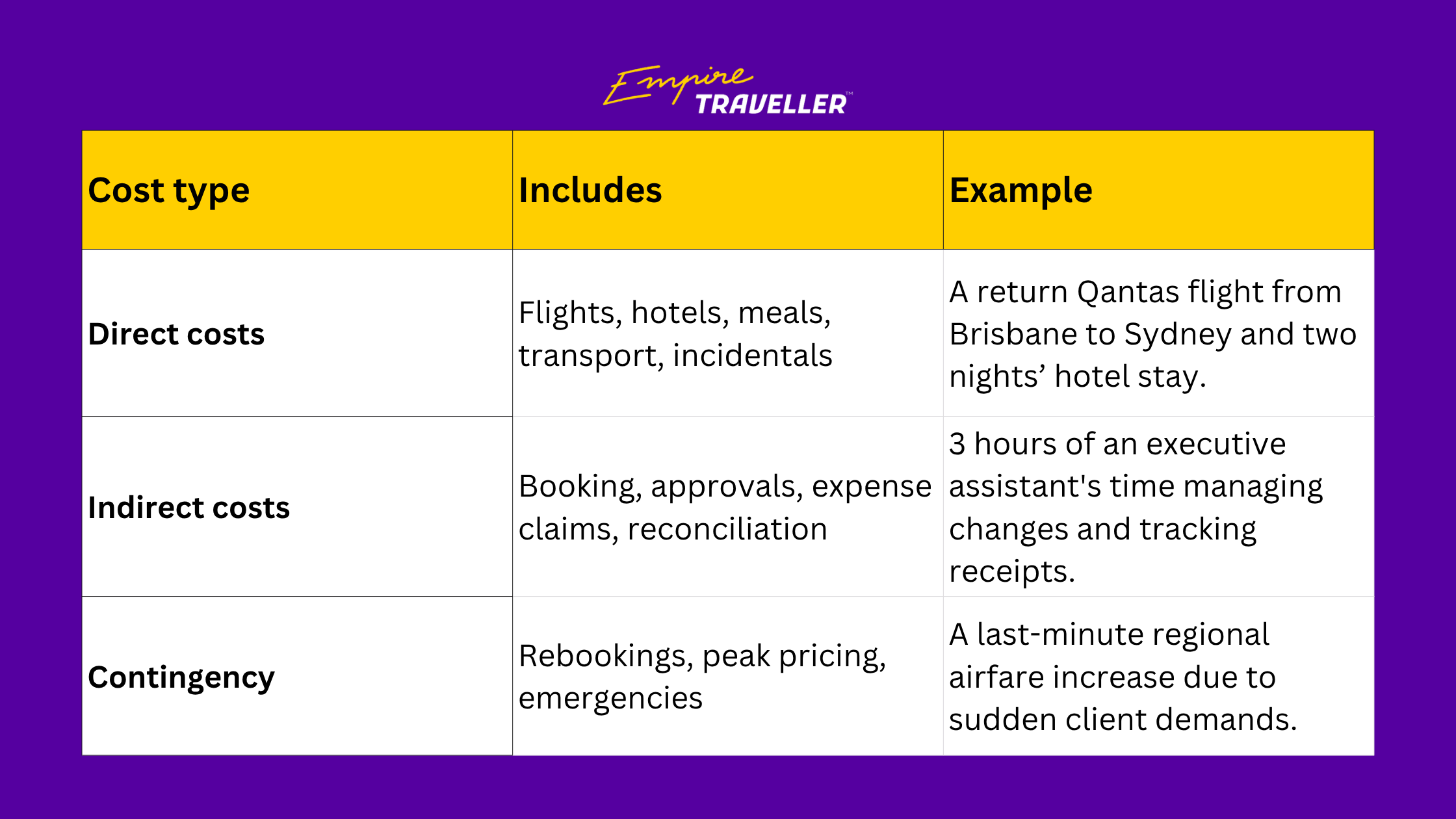
Total Travel Cost = (Total Trips x Avg. Trip Cost) + (Admin Hours x Hourly Rate) + Contingency
Here’s a breakdown of travel expenses:
Frequently Asked Questions
What is the average business travel budget for a small business?
Average budgets vary by sector, but many small businesses allocate roughly 1–3% of annual revenue to travel.
How do you handle unexpected business travel expenses?
Keep a contingency fund (5–10% of the travel budget), require expense pre-approval for emergency trips, and use a central card or travel account to manage surprise spending. Define reimbursement and escalation rules in your travel policy.
Can a travel management platform really save money for a small business?
Yes. An all-in-one travel management platform like EmpireTraveller drastically reduces direct travel spend via negotiated rates while cutting manual admin booking hours significantly.
Adapt to Smarter Travel with Empire Traveller
Smart travel reduces costs and frees time for revenue-generating work. Centralise bookings, set clear budgets, and use a travel management platform to enforce policy and uncover savings.
See how Empire Traveller automates your budget enforcement and claws back 20+ hours a month. Create an account to book your next trip!