
Small Australian businesses overpay for business travel primarily due to a lack of centralised booking platforms, last-minute flight reservations, missing out on discounts and loyalty perks, and unmonitored incidental expenses. While the cost of traveling for business has climbed mountains, the industry is still booming.
According to the latest Business Travel Index report by the Global Business Travel Association (GBTA), global business travel spending is forecast to reach a record $1.71 trillion USD in 2026, with the number of business trips worldwide expected to surpass 1.84 billion
Key Takeaways
- Book Early: Advance bookings (14–21 days) avoid up to 70% surge pricing on domestic flights.
- Centralise Management: Unified platforms eliminate unmonitored incidental spending.
- Flexible Fares: Semi-flexible options prevent full-fare losses when meeting schedules shift.
How Much Do Small Australian Businesses Spend on Travel?
While specific individual small business travel spend data varies greatly by sector, market analysis by IMARC Group estimates the overall Australian business travel market at approximately $23.5 billion USD, with data from Tourism Research Australia (TRA) indicating that business event travel expenditure makes up a major portion of this national spend, totalling approximately $17.2 billion AUD annually.
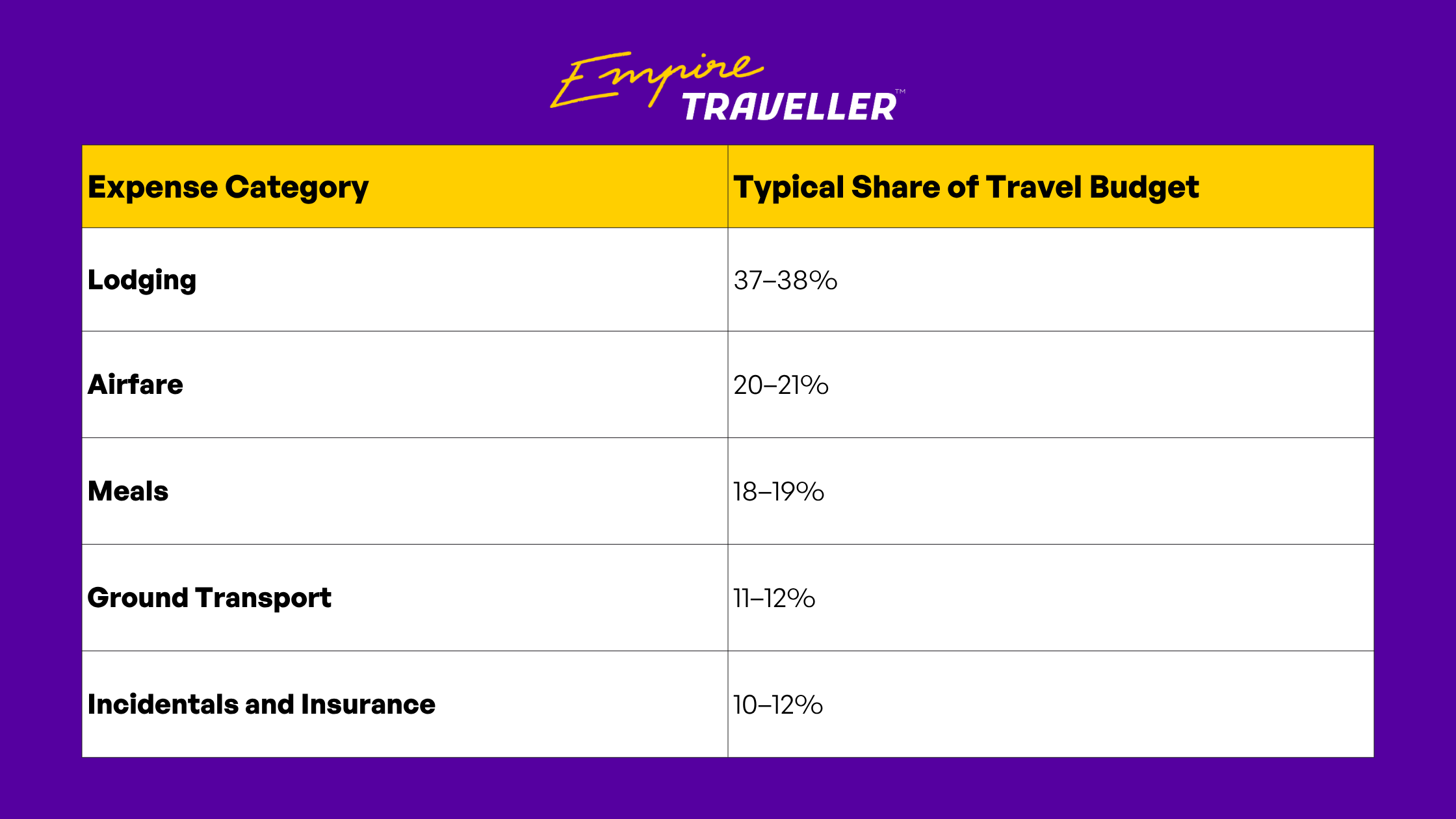
Source: Engine budget template, cited by EmpireOne.
5 Main Business Travel Expenses for Small Australian Businesses
Transportation (Airfares, Rideshares, and Taxis)
Transport typically consumes the single largest share of any travel budget.
- Airfares: Booking domestic flights on major routes (like Sydney–Melbourne) within 7 days of departure can increase ticket costs by 30% to 70%.
- Rideshares and Taxis: Unregulated rideshare usage, peak-hour surges, and airport congestion fees quickly compound over multi-day trips.
To lock in lower rates and avoid surge pricing, book your flights and car rentals on Empire Traveller.
Lodging and Accommodation
Depending on the destination and duration of stay, the cost of accommodations can add up dramatically. Small businesses often overpay by booking directly, missing out on better deals and offers available through third-party platforms.
Compare rates by booking your accommodation on Empire Traveller.
Meals and Entertainment
Food and entertainment are unavoidable expenses during business trips but can be reimbursed according to your travel policy. Many businesses use per diem structures based on salary levels and destination cost groups, in line with Australian Taxation Office (ATO) travel allowance guidelines, with total daily meal and incidental allowances.
Communication and Connectivity (Roaming and Wi-Fi)
While domestic data plans are standard, regional connectivity issues or unexpected international roaming charges (for trans-Tasman trips to New Zealand or APAC regions) can cause budget spikes. Hotel Wi-Fi upsells and unsecured public internet connections also create hidden productivity and security costs.
Incidental Expenses (Parking, Tolls, and Fees)
Incidental fees often hide in plain sight:
- Airport long-term parking fees
- Toll roads (e.g., CityLink in Melbourne, WestConnex in Sydney)
- Booking amendment fees and flight change penalties
Frequently Asked Questions
Are flexible fares actually cheaper in the long run?
Yes, for teams with unpredictable schedules. While a flexible or semi-flexible fare costs 15–30% more upfront than a discount non-refundable ticket, it eliminates full-ticket forfeiture when meetings shift. If your team cancels or reschedules more than 1 in 5 trips, flexible fares save money by retaining travel credits.
Is lounge access worth it for a small team?
Yes, provided your team travels frequently. Airport lounge memberships (or corporate credit cards offering lounge perks) offer secure Wi-Fi, quiet working environments, meals, and power stations. The increase in employee billable hours and productivity during layovers routinely outweighs the annual membership fee.
How far in advance should I book to save on work travel?
Aim for 14 to 21 days in advance. Booking domestic Australian flights at least 2 weeks before departure generally secures fare classes before advance-purchase discounts expire.
Make Business Travel Cost-Effective
The activity around business travel has undoubtedly accelerated. More trips, more meetings, and more reasons to keep up with your budget.
Empire Traveller exists to ensure small business owners don't pay more simply because they operate at a smaller capacity. We give EmpireOne members access to exclusive rates on flights, hotels, and experiences.
Get started for free to start making your business travel cost-effective!