

One question that founders and small business owners like to ask is, “What is the best digital marketing approach? Focus on organic or invest in paid ads?”
With so many options available, from search engine optimisation (SEO) to pay-per-click (PPC) advertising, choosing the right marketing strategy can feel overwhelming at times.
In essence, both of them can improve online visibility. However, each approach has its own advantages and challenges. Organic marketing is seen as a non-paid strategy to reach an online audience, while paid advertising requires you to pay a certain amount, depending on the campaign, to promote a particular product.
Statista found that global advertising spending has grown by over 50% since 2019, with digital ads driving most of this growth.
If there’s a balance between these two, they may be a much better and more effective way to improve online visibility. Let’s explore their differences and understand why finding the right balance between them is an effective strategy for small and medium-sized enterprises (SMEs).
What is Digital Marketing?
This is not all brand new to you. You know the basics and you may even have tried to set up campaigns for your business. However, there is more to it than just what you see on the surface.
It has a wide range of tactics being leveraged to reach and engage a target audience across different channels, including SEO, PPC, social media marketing, content marketing, and email marketing.
Unlike traditional marketing, which relies on print, radio, or TV ads, digital marketing, it allows SMEs to reach their audience broadly.
What is Organic Marketing?
A non-paid marketing strategy to improve online visibility is what we call organic marketing.
It focuses on attracting an audience naturally by creating and sharing content without paying for ads. Instead of buying exposure, businesses earn attention over time through relevance, consistency, and value.
There are different types of content for each channel. And it works best when content is tailored to the platform it’s published on.
Here are some common examples:
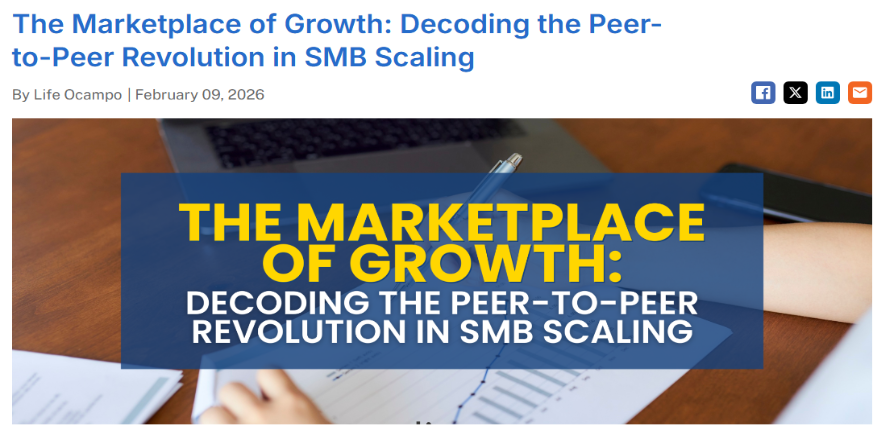
Search EngineOptimisation (SEO): Blog posts, case studies, success stories, e-books, and other content that can be found on Google’s search engine.
Example (via Scaling): A blog post targeting SMB trends
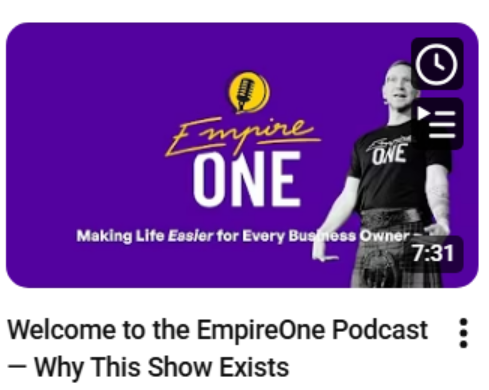
Video Marketing: The videos you see on YouTube can be found in search engines and on the platform.
Example (via EmpireOne): A YouTube video on EmpireOne’s Podcast
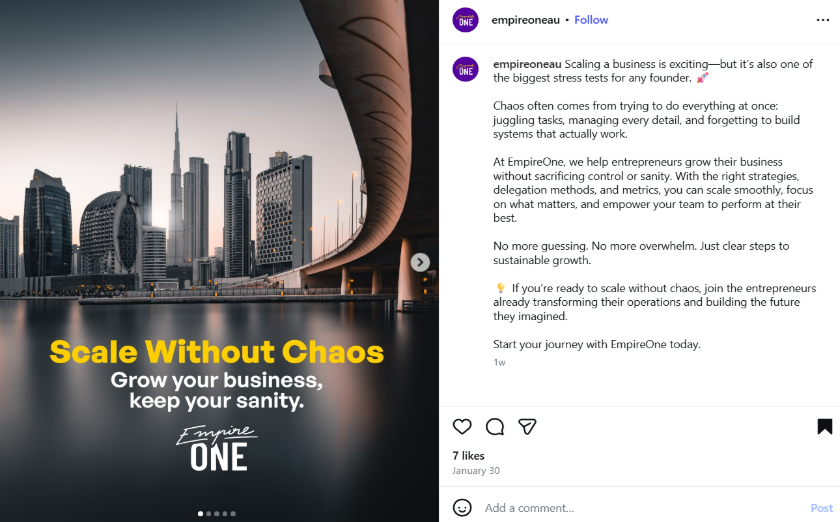
Social Media: Carousel, static posts, reels, and other unpaid social media posts on different social media platforms, such as Facebook, TikTok, Instagram, and more.
Example (via EmpireOne): A carousel post on Instagram
The Pros and Cons of Organic Marketing
Like any digital marketing approach, organic marketing comes with its own strengths and limitations. While it’s often appealing because it doesn’t require ad spend, it does demand time, consistency, and effort.
Pros
- Boost brand visibility and credibility
- Helps create a loyal community
- Improve search engine rankings over time
- Establish direct communication with your audience
Cons
- Requires a long-term strategy to see results
- Impact can be affected by unpredictable algorithm changes
What is Paid Advertising
Paid advertising is a digital marketing approach where businesses pay to promote their products or services to a targeted audience. Unlike organic marketing, which relies on building awareness and increasing website traffic naturally, paid advertising helps drive conversions.
Platforms like Google Ads, Meta, and LinkedIn Marketing Solutions let you run a paid ad to start appearing in front of your audience almost immediately, without the long wait. You get to decide how much to spend, who sees your ads, and how long the campaign runs.
The most popular model amongst the different models is Pay-Per-Click (PPC). When someone clicks on an ad, then that’s when you only pay. It works exactly like it sounds.
The Pros and Cons of Paid Advertising
This strategy comes with both benefits and limitations that should be considered before investing budget into campaigns. It may offer speed and precision, but it also requires ongoing monitoring to ensure your spend delivers real value.
Pros
- Delivers immediate visibility and traffic
- Allows precise audience targeting based on location, interests, and behaviour
- Makes it easier to track performance and measure ROI
- Supports short-term campaigns, promotions, and product launches
Cons
- Can become costly if campaigns are not managed properly
- Results stop once ad spend stops
- Requires ongoing optimisation to avoid wasted budget
- Competitive industries may drive up cost-per-click
Finding the Right Balance in SMEs' Digital Marketing Approach
There’s no one-size-fits-all solution in the digital world of marketing.
Organic marketing and paid advertising each serve different purposes, and for most SMEs, the real value lies in using them together rather than choosing one over the other.
Finding the right balance between these two strategies allows you to achieve short-term goals while building long-term online growth. Paid ads for small businesses can provide immediate visibility and conversions, while organic efforts like SEO, content, and social media help establish credibility, attract loyal followers, and reduce dependence on ongoing ad spend.
At Empire Amplify, we want to make your life easier as a business owner. We offer premium digital marketing solutions for our EmpireOne members that will drive growth and deliver measurable results for SMEs.
When you’re ready to take the leap, sign up and fill out the form to become a member! It’s free and it will only take a minute or two of your time.